
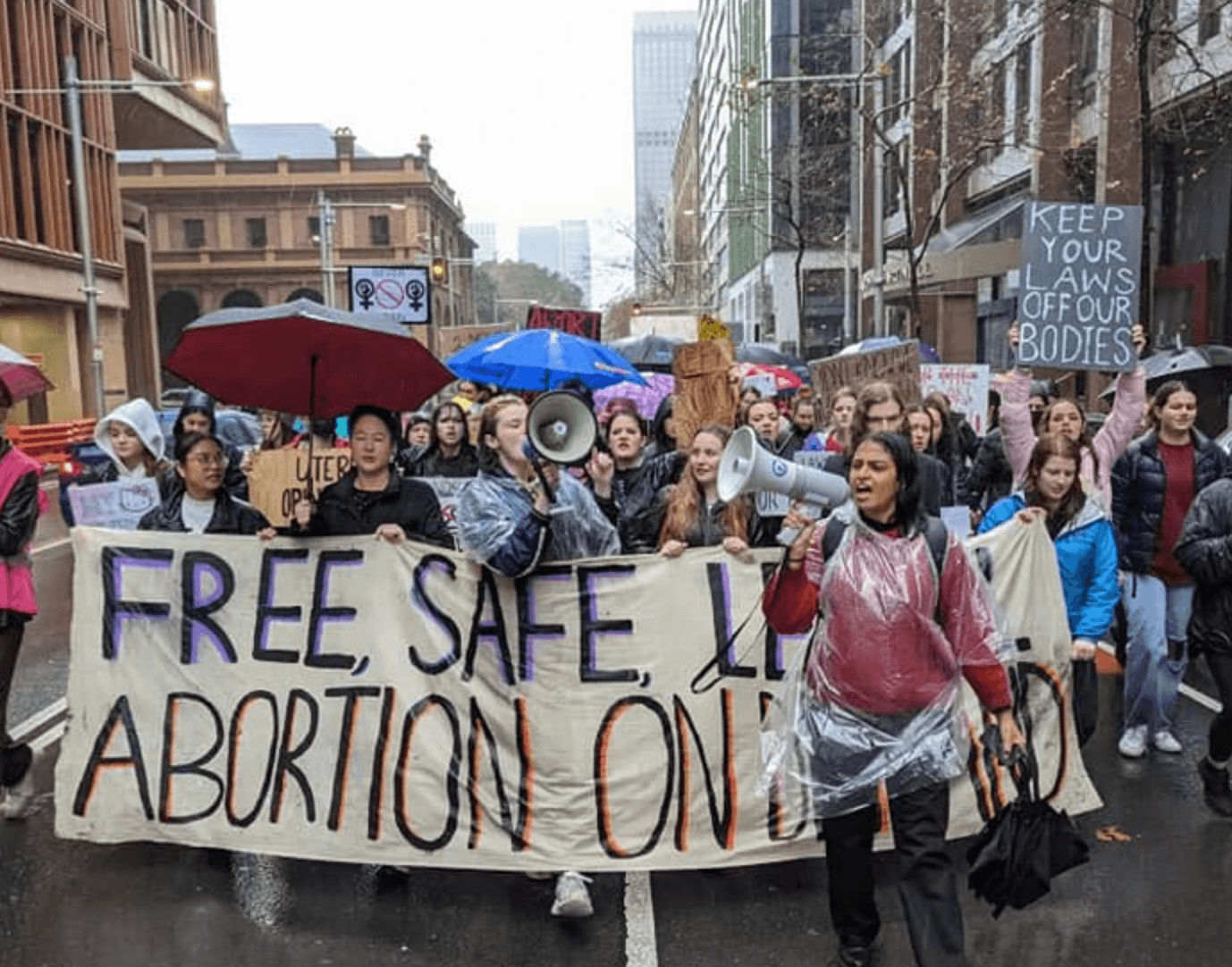
Fighting for women’s liberation
Women continue to experience discrimination, violence, abuse and oppression. Our society is deeply sexist, and this affects women from the moment they are born until the day they die. The gender pay gap remains a reality; women on average 78.9 cents from every $1 that men make. Over a lifetime, this results in less savings, less assets, greater precarity and greater financial dependence. Reproductive rights may be enshrined in law, but a lack of government funding makes them difficult to access, especially for working class women. Most public hospitals do not offer abortion services, forcing women to pay hundreds of dollars out of pockets to private clinics. 1 in 5 women have experienced sexual violence at some point in their life, while 1 in 2 have experienced sexual harassment. Yet support services have been gutted by successive governments.
Capitalism today profits from sexism, from sexist advertising to unpaid household labour. We stand for challenging sexism at all levels, which means challenging the structures of capitalism. We will fight for free, accessible and on-demand reproductive rights. We will fight to abolish the gender pay gap, and to reduce the burden of childcare on working women. We will fight for women to be treated as equals to men- in the workplace, in the home and in politics.
We’ll fight for
Economic justice
- Close the gender pay gap by delivering major pay rises in majority-women industries including nursing, teaching, social work, disability support and care work.
- Build a universal, free and publicly owned early childhood education and childcare system across NSW.
- Massively expand public housing so that no woman is forced to remain in an unsafe, abusive or unaffordable home because she cannot afford to leave.
- Rebuild publicly provided disability and community-care services and campaign for aged care to be brought fully into public hands nationally.
- Introduce paid reproductive leave across the NSW public sector and local government, and campaign for a national entitlement covering all workers.
- Expand paid fertility, miscarriage and reproductive-health leave beyond the limited entitlements currently available to NSW public-sector workers. NSW government-sector workers currently have five days of paid fertility-treatment leave.
Reproductive rights
- Guarantee free contraception through the NSW public health system, including free access through public hospitals, community health services and publicly funded clinics.
- Guarantee free abortion care through the public health system, with abortion services available across NSW, including rural and regional areas.
- Require all publicly funded hospitals to provide or arrange timely access to abortion and reproductive healthcare, regardless of religious affiliation.
- Expand access to medical abortion by funding GP, nurse practitioner and midwife training.
- Remove remaining legal barriers to abortion after 22 weeks and treat abortion like other healthcare, based on informed consent and clinical need. Current NSW law requires two specialist medical practitioners to agree there are sufficient grounds for an abortion after 22 weeks.
- Expand free specialist women’s health services, including treatment for endometriosis, pelvic pain, menopause and reproductive health, with services available throughout regional NSW.
- Defend every person’s right to control their own body and reproductive life.
Safety and support
- Massively increase permanent funding and bring into public hands women’s health centres and domestic violence services and shelters.
- Urgently expand crisis, transitional and permanent public housing for women and children escaping domestic and family violence.
- Guarantee access to free legal assistance, counselling, healthcare and income support for survivors of domestic and sexual violence.
Education
- Make comprehensive Respectful Relationships Education a properly funded, mandatory whole-school program in every NSW school, covering sexism, consent, gender inequality, coercive control, sexual violence and the history of women’s resistance.